 La Fenice Tickets
The Phoenix: La Fenice’s History of Fire and Rebuild
1792: the opening
Teatro La Fenice was built to replace an earlier opera house that had burned. It opened 16 May 1792 in San Marco as Venice’s grand new theatre for opera, ballet and concerts. The design was the classical Italian horseshoe — tiered boxes, a gilded auditorium, a royal box, all wrapped in stucco and paintings. It was magnificent. The name "La Fenice" (The Phoenix) honours the opera company that rose from the ashes of the old theatre.
1836: the first fire
A fire destroyed La Fenice in 1836. The cause was determined to be accidental, though the records are sparse. The theatre was rebuilt quickly and reopened in 1837. The new interior followed the original 19th-century design as closely as possible. The lesson: Venice had learned to rebuild, and fast.
1996: the arson fire
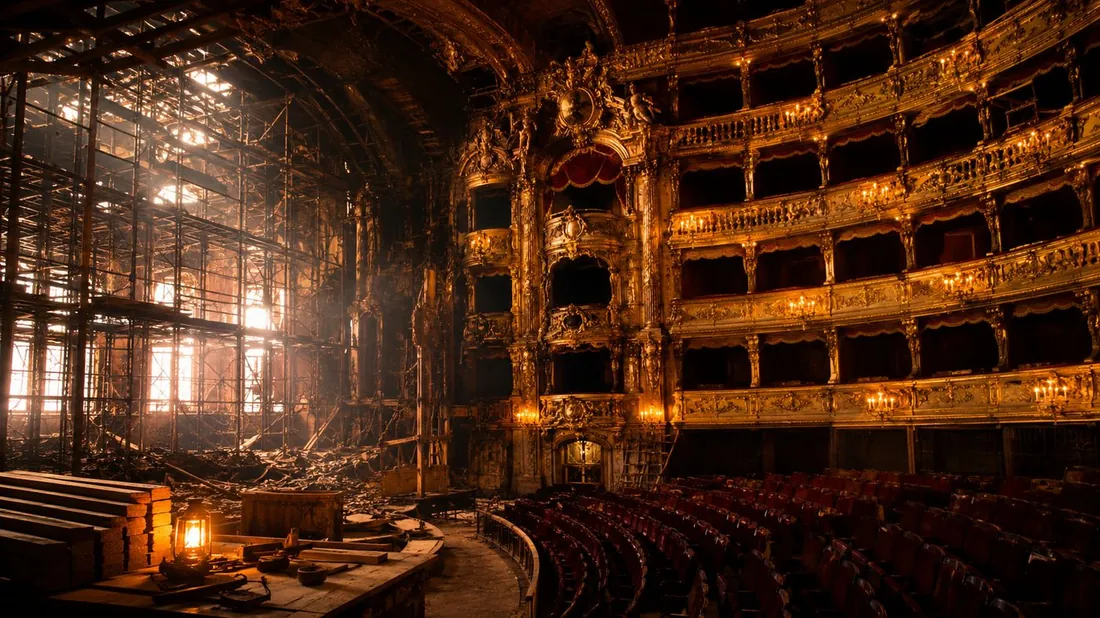
On the night of 29 January 1996, a fire deliberately set by arson gutted La Fenice. Two electricians were later convicted of the crime. The fire was catastrophic — the interior was destroyed, the roof collapsed, and the building stood blackened and hollow. For seven years, La Fenice was a ruin. The book The City of Falling Angels by John Berendt (2005) tells the story of the fire and the mystery surrounding it. If you visit Venice and read the book beforehand, the 1996 fire feels recent and real.
2003: the phoenix rises
Rebuilding took seven years. The commitment was to rebuild "com’era, dov’era" — as it was, where it was. No modernism, no shortcuts. The architects and craftspeople restored the 19th-century design in detail: the same horseshoe shape, the same boxes, the same gilded stucco, the same paintings. The theatre reopened with a gala on 11 December 2003. Today, you walk into the 19th-century auditorium the same way visitors did in 1837 and (briefly) in 1996 before the fire.
What that means for your visit
When you take a daytime ticket and walk into La Fenice, you are walking into a theatre that was destroyed and rebuilt not once but twice. The interior you see is exactly as architects meant it to be — it has been restored with obsessive care. That story of fire and rebuild is the backbone of the place. The architecture carries the weight of it. That’s why even a 45-minute audio-guide visit feels significant. You are not in a replica. You are in the real thing, rebuilt.
Read John Berendt’s The City of Falling Angels (2005) before your visit to feel the 1996 fire’s impact. The theatre itself tells the story.
Frequently asked questions
Why is La Fenice called 'The Phoenix'?
The name honours the opera company that rose from the ashes of an earlier theatre. The theatre building itself has become the symbol: it has burned twice (1836, 1996) and been rebuilt both times, literally rising from its own ashes.
How many times did La Fenice burn?
Twice. Once in 1836 (rebuilt 1837) and again on 29 January 1996 (arson; rebuilt and reopened in 2003). Both times it was reconstructed faithfully to the original 19th-century design.
How old is La Fenice?
It opened 16 May 1792, so it’s over 230 years old. The interior you see today is the 19th-century design, faithfully restored after the 1996 fire. Read the full rebuild story.