 La Fenice Tickets
Key takeaways
- Daytime entry is not free — tickets from about €14 with audio guide, or about €29 guided. The truth about free entry.
- Audio guide in 8 languages — English, French, German, Italian, Portuguese, Russian, Spanish and more. See what each ticket includes.
- No dress code for daytime visits — come as you are in comfortable shoes. Dress code facts explained.
- The theatre burned twice and was rebuilt — 1836 fire, then the 1996 arson, reopened faithfully in 2003. The Phoenix story.
- Evening opera is separate and pricier — book through the official box office, not these daytime tickets. How to see an evening performance.
What the Audio Guide ticket includes
The flagship self-guided daytime visit — the highlights and what’s in the price.
What you see
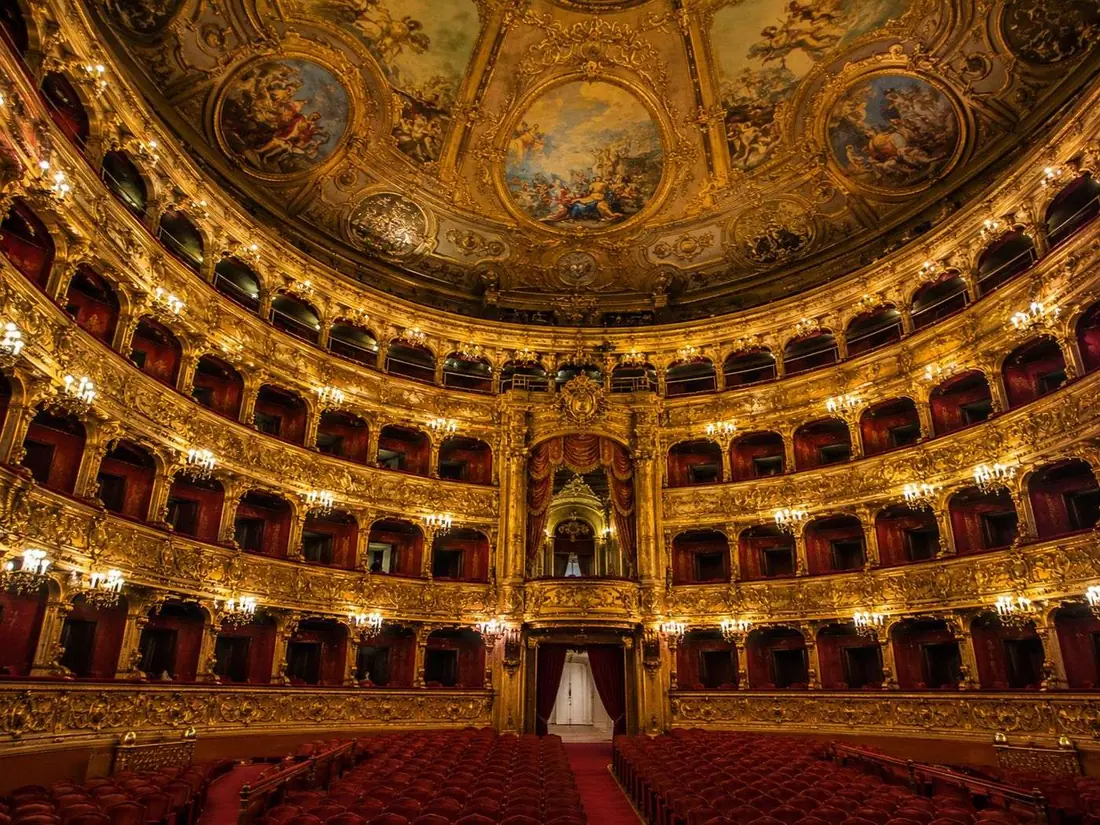
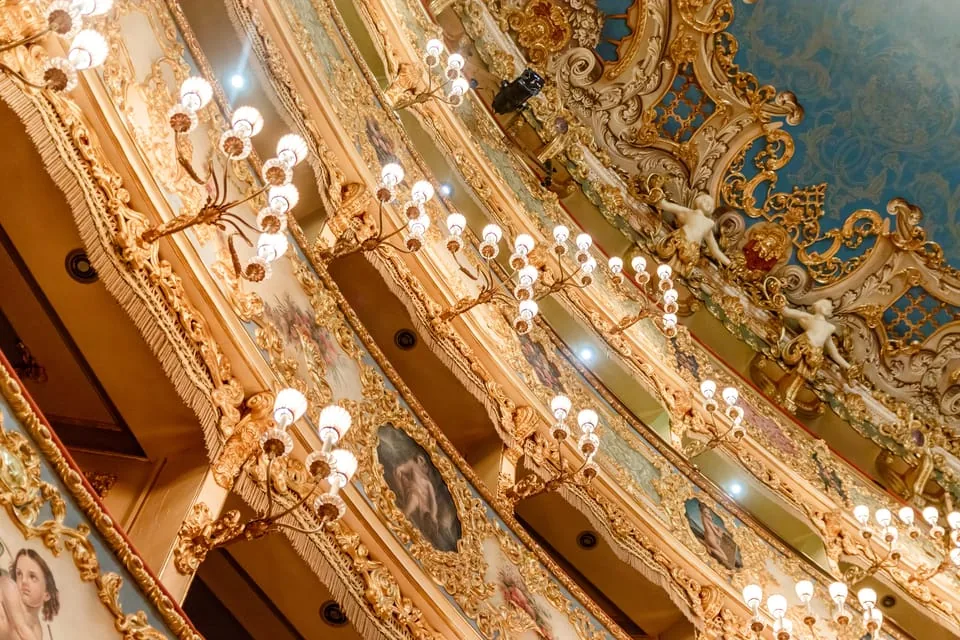
- The auditorium: the horseshoe of tiered boxes and galleries
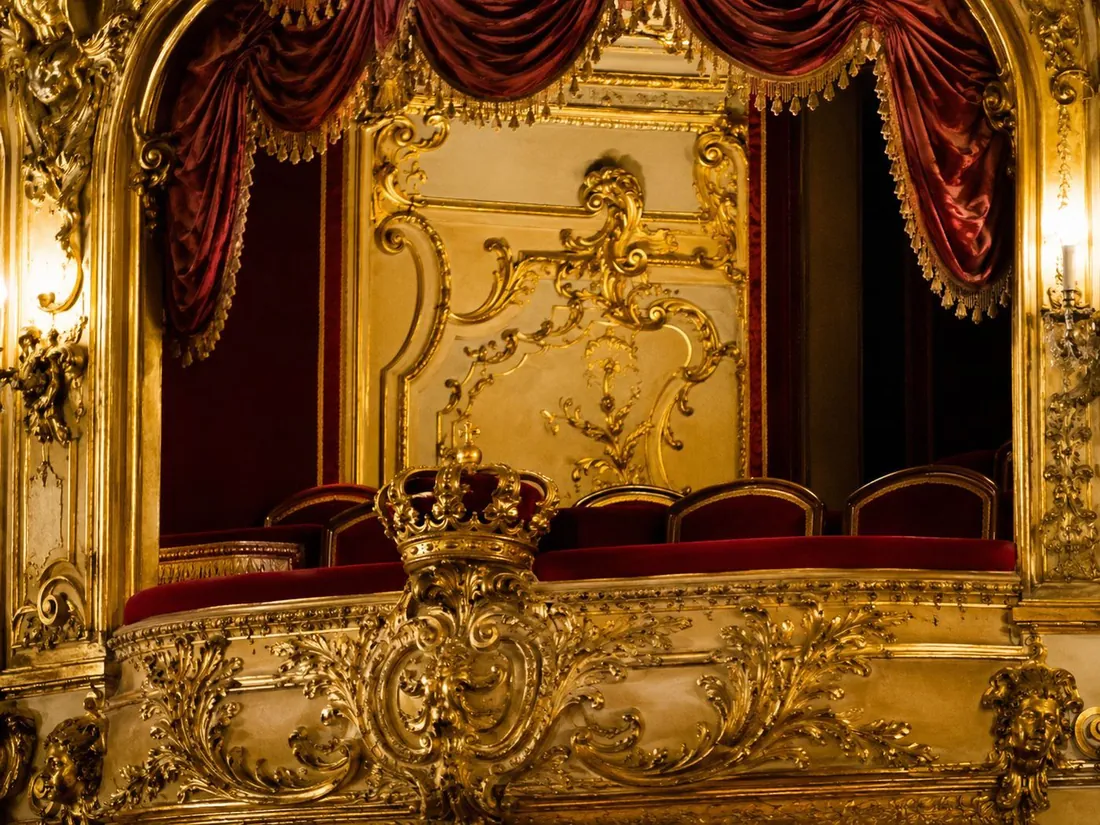
- The royal box: where emperors and nobility sat
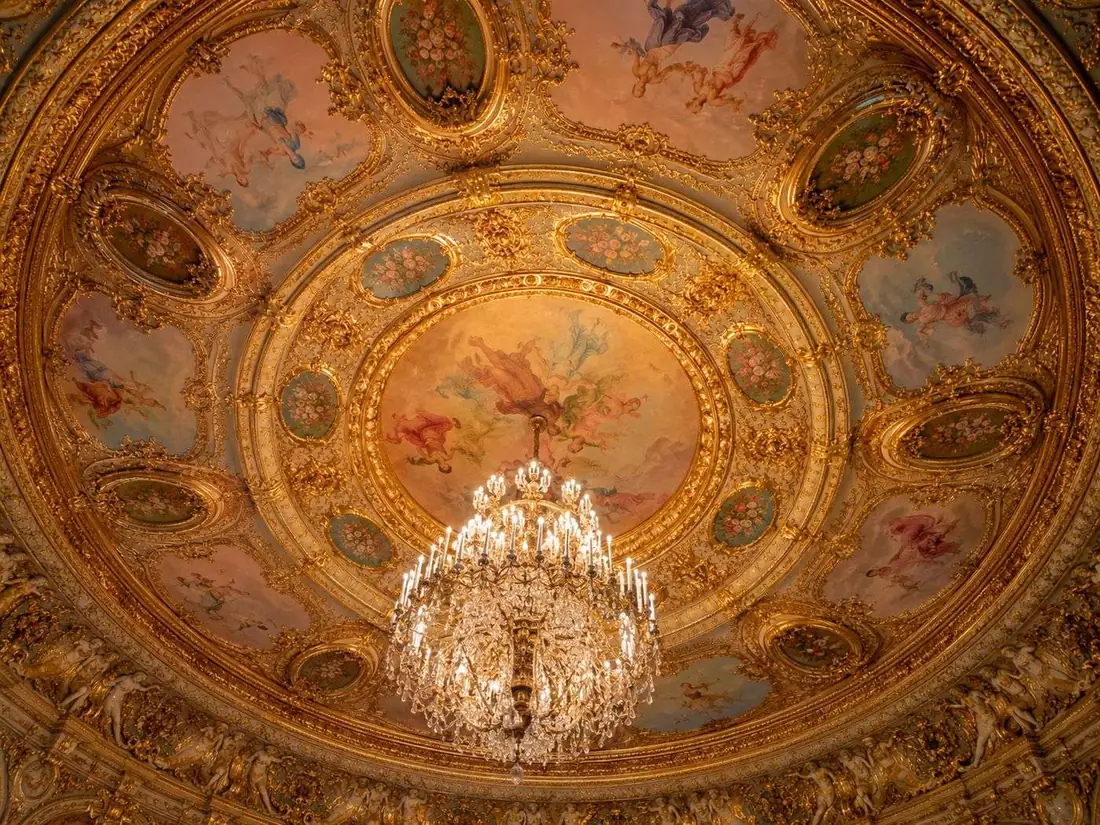
- The ceiling paintings and gilded stucco
- The Apollonian foyer rooms upstairs
- The stage where Verdi premiered Rigoletto and La traviata
What’s included
- Audio guide in 8 languages
- Skip-the-ticket-line entry
- 45–50 minute self-guided visit
- Wheelchair accessible
- Free cancellation up to 24 hours before
What you see inside La Fenice, in order
The daytime interior tour, stop by stop — here’s what you see, in order.
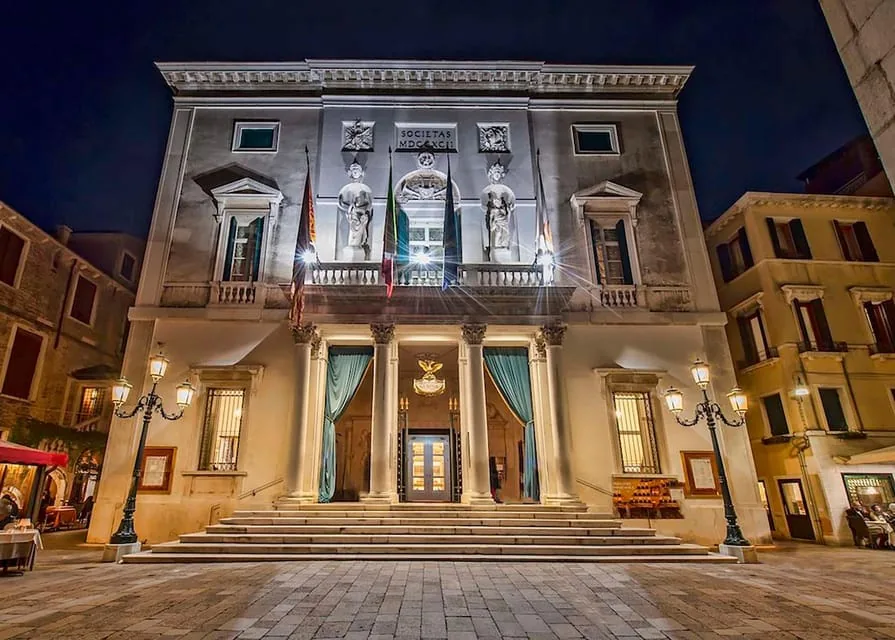
A typical daytime visit starts at the ticket counter near the main entrance on Campo San Fantin. You collect your audio guide (in your chosen language) and enter the auditorium to explore at your own pace.
- The auditorium — The horseshoe of tiered boxes, gilt railings, and the sight that makes every visitor pause.
- The royal box — The ornate imperial box where rulers and dignitaries sat, elevated above the ordinary boxes.
- The ceiling and stucco — Painted dome, gilded decorative plasterwork, candlelit chandeliers — 19th-century grand design.
- The Apollonian foyer rooms — Upstairs salons named after Apollo, frescoed and mirrored, where the audience mingled.
- The stage — The boards where Verdi premiered Rigoletto (1851) and La traviata (1853).
The whole visit takes about 45–50 minutes at your own pace and is wheelchair accessible. From here you can visit the official website to book an evening performance, or upgrade to a guided tour for deeper context.
How booking works
Choose your ticket
Self-guided audio guide, or guided tour with a live guide.
Check live availability
See real dates and prices from GetYourGuide, updated daily.
Book with free cancellation
Reserve online; cancel up to 24 hours before for a full refund.
Collect your audio guide
Arrive at the ticket counter on Campo San Fantin, collect your guide and enter.
La Fenice Audio Guide ticket
The flagship self-guided daytime visit: skip-the-ticket-line, audio guide in 8 languages, 45 minutes at your own pace.
Which La Fenice ticket is right for you?
Three daytime experiences. Here’s how they compare.
| Most popularLa Fenice Opera House Entry Ticket with Audio Guide | The Majestic Teatro La Fenice: Guided Tour | La Fenice Theater Guided Tour | |
|---|---|---|---|
| Price | from €14 | from €29 | from €74 |
| Duration | 45 min | 1 hour | 1 hour |
| Experience | Self-guided audio | Live guide walks you | Live guide, in-depth |
| Group size | Individual pace | Small group | Small group |
| Best for | Budget & flexibility | Personal tour | Opera lovers |
| Accessibility | Wheelchair accessible | Not accessible | Not accessible |
| Book this → | View → | View → |
Photo Gallery
Teatro La Fenice — through the lens
The auditorium, the boxes, and the scenes that stay with you.
Popular La Fenice tickets
From the budget audio guide to the in-depth guided tour — the tickets worth your time.
 Most booked
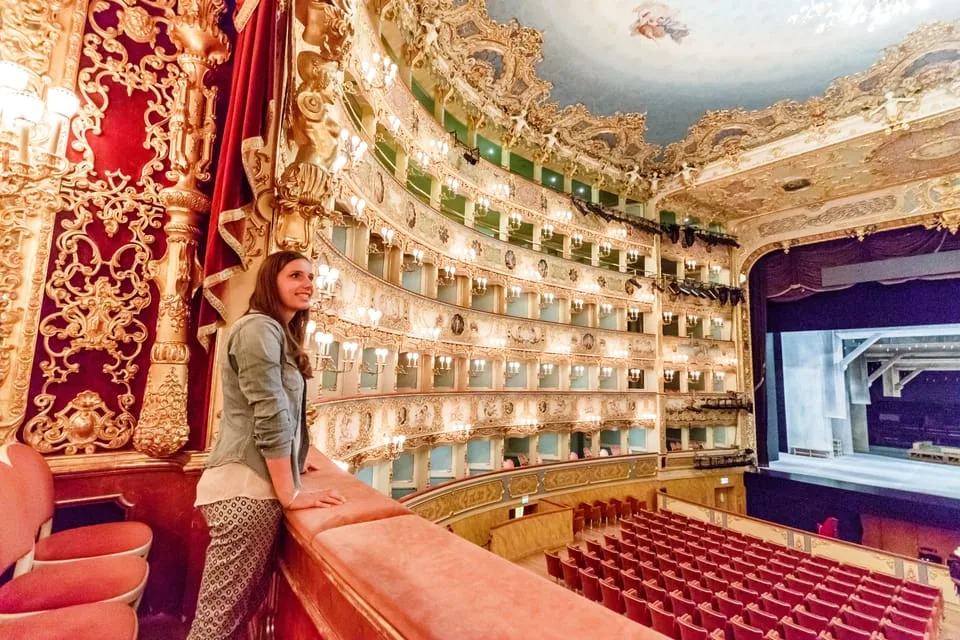
La Fenice Opera House Entry Ticket with Audio Guide
 Guided favourite
 In-depth
 Small group
What guests say about La Fenice tickets
Reviews from travellers who booked the tickets we feature.
The theater is magnificent.
Phenomenal — so glad I booked.
Audio guide excellent, clearly signposted, quick check-in, great value.
Great after reading the book about the fire — a stunning building not to be missed.
Learned so much, very personal — more than an audio guide could give.
Knowledgeable and pleasant guide. Well paced.
Ratings and reviews are the operators’ live GetYourGuide figures. Read our full tour reviews ›
Quick answers before you book
A few things worth knowing so you spend your time enjoying La Fenice, not the logistics.
Is La Fenice worth visiting?
If you care about music history or Italian opera, absolutely. The auditorium is genuinely gilded and ornate, and you’re standing in a room where Verdi premiered two of his greatest operas. Even if opera doesn’t move you, the building is architecturally worth the entry price. The full fan-versus-non-fan verdict.
Can you visit during the day?
Yes. Most people assume you can only go for an evening performance, but daytime visits are the norm. The theatre closes to visitors during rehearsals and shows, so check teatrolafenice.it for opening hours that day. Compare the ticket options.
What do I wear?
For a daytime visit, come as you are — no dress code. Comfortable shoes for Venice’s bridges matter more than attire. For an evening opera, Italians dress smart-casual to elegant, but jeans are tolerated. The dress code explained.
What’s the Phoenix story?
La Fenice means The Phoenix. The theatre has burned twice — in 1836 and again on 29 January 1996 (arson). Both times it was rebuilt faithfully “as it was, where it was” and reopened in 2003. The full history and fires.
Is it free?
No. Daytime entry requires a ticket from about €14 with an audio guide, or about €29 with a live guide. It is not a church you can wander into free. The truth about free entry.
How do I get there?
In Venice, you arrive on foot or by vaporetto (water-bus). La Fenice is in San Marco, a short walk from Piazza San Marco. Nearest stops: Santa Maria del Giglio (Giglio) and Rialto. See the guide for vaporetto details.
Can’t make these dates?
Browse more available La Fenice tickets and find one that fits your schedule — all with instant confirmation and free cancellation.
Teatro La Fenice, explained
Most people who visit La Fenice think they are going to see an evening opera. They arrive at the box office, discover that tickets cost far more than they expected, that they need to book weeks ahead, and that they have no idea what to wear. Then they leave disappointed. The truth is simpler: there are two completely different things you can do at La Fenice, and most visitors actually come for the first one. The second is a separate experience altogether.
The two experiences: daytime visit vs evening opera
The daytime visit is what the overwhelming majority of tourists do. You buy a ticket (from about €14 with an audio guide, or about €29 with a live guide), you collect your audio guide or meet your guide near the entrance on Campo San Fantin, and you spend 45 minutes to an hour inside the auditorium. You see the gilded boxes, the stage, the royal box where emperors sat, the frescoed ceiling, the foyer rooms upstairs. You leave. It is a visit to a beautiful room — a room that has burned twice and was rebuilt each time, most recently in 2003.
An evening opera is entirely different. You are not visiting a building; you are attending a performance. You book through the official theatre box office at teatrolafenice.it, not through these daytime-ticket sites. The season runs across the year; prices vary wildly by seat and show. You need to understand that jeans are frowned upon in a theatre but not forbidden. That is the other experience, and it is separate.
Why it is called The Phoenix
La Fenice means The Phoenix — the bird that rises from its own ashes. The theatre was built in 1792 and for a century was Venice’s grand new opera house. In 1836 it burned nearly to the ground. It was rebuilt and reopened a year later, exactly as it had been.
In January 1996 it burned again. This time it was arson — two electricians were later convicted. The fire gutted the entire building. For seven years the theatre stood empty and blackened. But the city rebuilt it again, faithfully, "com’era, dov’era" — as it was, where it was — and it reopened with a gala concert in December 2003. That story — the refusal to let it die, the obsessive attention to detail in the rebuilding — is the story of La Fenice. It is why Venetians are attached to this building and why it matters that you understand it as a living thing, not just a pretty interior.
Which ticket suits whom
If you have 45 minutes and want flexibility, the audio guide ticket (about €14) is the right choice. You go at your own pace, rewind if you like, skip ahead, take photos. The audio is in 8 languages. You skip the ticket queue. You do not depend on a guide’s schedule or personality. It is wheelchair accessible.
If you want a real person to talk to you and walk you through the building, the Majestic guided tour (about €29) gives you exactly that. A guide walks a small group through the auditorium, the boxes, and the foyer, and tells you stories. The quality of the guide matters; some are excellent, some are adequate. It takes about an hour. It is not wheelchair accessible.
If you are an opera lover and you want the in-depth story of the premieres and historical context, the Explore tour (about €74) is newly listed and goes deep. It is also not wheelchair accessible.
If you are booking an evening opera, you are doing something different. Book at the official box office instead.
The dress code truth
There is no dress code for a daytime visit. Come as you are. Wear whatever is comfortable for walking Venice’s bridges. Nobody cares if you are in jeans or a dress.
If you are booking an evening opera, you should know that Italians dress smart-casual to elegant. A premiere or gala is dressier. Jeans are technically tolerated but you will feel more comfortable in something smarter. It is not enforced like it was in the 1950s — you can go in jeans and no one will stop you. But you will notice you are the outlier in the room.
Is it free?
No. There is no free-entry day for tourists. There is no time when you can wander in and look around without paying. It is not a church or a civic building. Daytime entry requires a ticket starting at about €14. That is the price of admission.
Getting there: vaporetto and location
Venice has no cars. You arrive on foot or by vaporetto — the water-bus system that is Venice’s only public transport. La Fenice is in San Marco, a short walk from Piazza San Marco, on Campo San Fantin 1965. The nearest vaporetto stops are Santa Maria del Giglio (Line 1 or 2) and Rialto (several lines). If you are arriving by airplane (Marco Polo airport), take the Alilaguna water-bus or a land bus to Piazzale Roma and then the vaporetto into the city. A single vaporetto ticket costs about €10; a three-day pass is about €42.
If you are staying on the mainland and only visiting for the day, check the train or bus schedules. Venice’s train station is Santa Lucia; from there a 20-minute walk or a single vaporetto ride gets you to San Marco.
Practicalities
Daytime visiting hours vary. The theatre closes during rehearsals and performances, which happen regularly. Check the opening hours on teatrolafenice.it before you go. All daytime tickets offer free cancellation up to 24 hours before, so you can book early and adjust if something changes. Bring comfortable shoes and water. There is a cafe inside, but no full food service. Audio guides come in English, French, German, Italian, Portuguese, Russian, Spanish and more.
The whole visit takes about 45–50 minutes if you move through at a steady pace. The building is not massive; it is intimate. A Venetian architect designed it to sit perfectly in the Venetian streetscape, not to overwhelm. That intimacy is part of why it works, and why it recovered from two fires.
Frequently asked questions
Can you visit La Fenice during the day?
Yes. Most people think you can only attend an evening opera, but daytime visits are open to the public. The theatre closes during rehearsals and performances, so check teatrolafenice.it for that day’s hours. See the daytime ticket options.
What does La Fenice mean?
La Fenice means The Phoenix. The theatre burned in 1836 and was rebuilt; then again in a notorious 1996 arson fire that gutted the building. It was faithfully rebuilt and reopened in December 2003. Read the full Phoenix story.
What is there to see inside?
A gilded auditorium in the classic 19th-century horseshoe design, with tiered boxes, a royal box, frescoed ceiling, and the stage where Verdi premiered Rigoletto and La traviata. The whole visit takes about 45–50 minutes. See what you encounter, stop by stop.
Is there a dress code?
For a daytime visit, no — come as you are in comfortable shoes. For an evening opera, Italians dress smart-casual to elegant, but jeans are fine. Full dress code details.
How much do tickets cost?
The audio guide (self-guided) starts at €14. Guided tours range from about €29 to €74. Evening opera tickets are separate and vary by seat. Full price breakdown.
Can you cancel if your plans change?
Yes. All four daytime tickets offer free cancellation up to 24 hours before, with instant online confirmation. Check the specific ticket’s cancellation terms before you pay.
How do you get to La Fenice?
La Fenice is in San Marco, a short walk from Piazza San Marco. Venice has no cars; arrive on foot or by vaporetto (water-bus). Nearest stops: Santa Maria del Giglio (Giglio) and Rialto. Transport and arrival details in the guide.
Is La Fenice free to enter?
No. Daytime entry requires a ticket from about €14. It is not a church or civic building you can wander into free. The truth about free entry.
Still have questions? Email us hello@lafenicetickets.com